Black American Muslim 2019-4 by Jamillah Karim on Scribd
Thursday, April 18, 2019

Sunday, September 9, 2018
Coming Out as a Radical Lover: Prayers, Poems, and Passion for Hagar (R)
By Jamillah Karim
I
almost believed the story I told myself. That Radical Love was something new, that
started when in love with him.
But
then I found an old letter to her.
Love
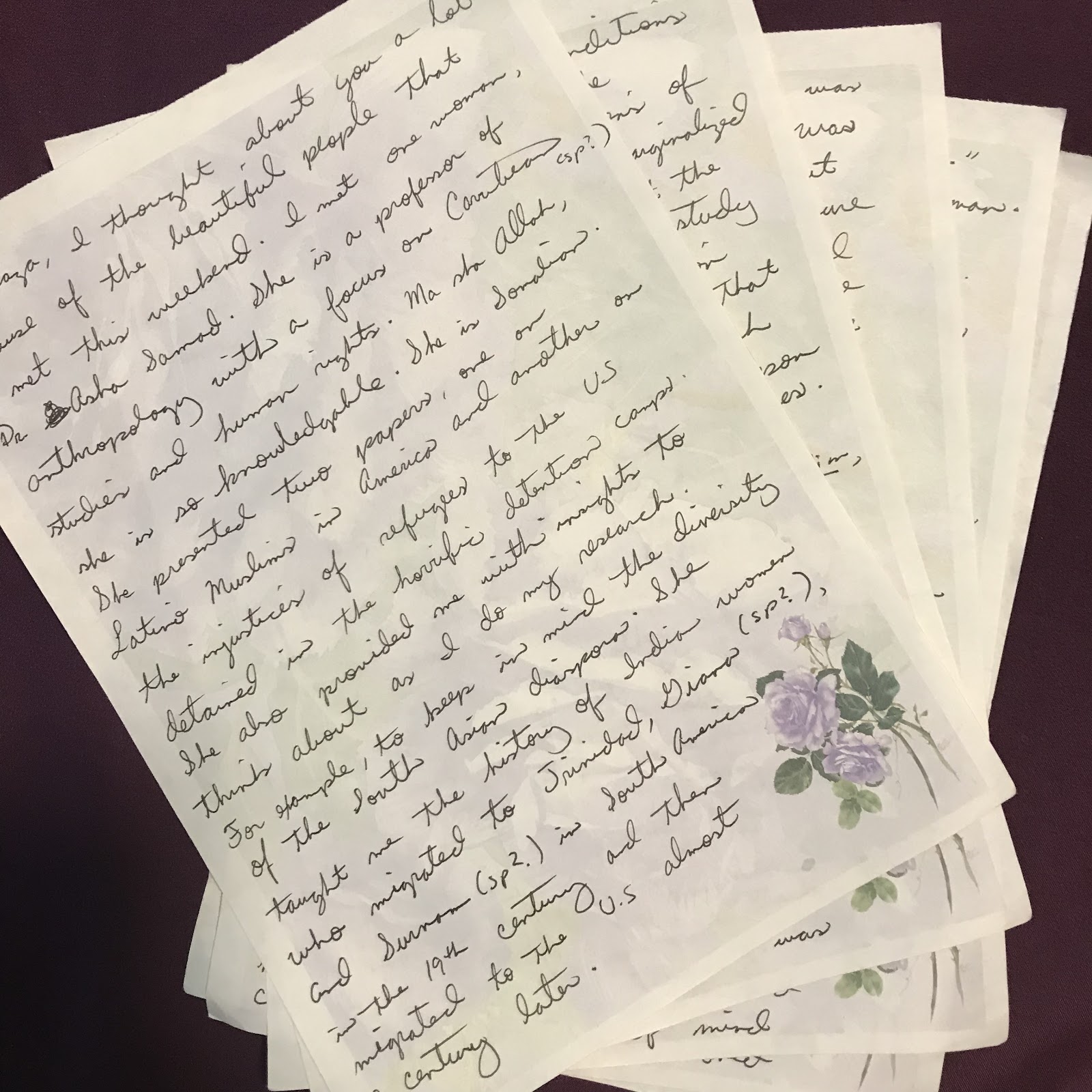
Note #1
July
3, 2001
. .
.
I
pray that this letter finds you in Allah’s mercy and love. I am writing this
letter inspired to write to you and only you. I feel this way because I realize
that God sent you as a companion for me on the path, and I did not always know
it or appreciate it.
I
don’t know where to begin. Allah (swt) is so Merciful, so Generous, and so
Magnificent.
This
letter was to a dear friend who introduced me to a program to sit with and
learn from eminent scholars of our time. I told her about my Maliki fiqh class
with Shaykh Hamza, and then wrote,
My
heart and intellect want and desire so much. The knowledge quenches my thirst
but only makes me thirsty again. Pray patience for me.
I was
twenty-five then. And not married. Not surprisingly, the next paragraph in the
letter describes my desire for marriage and a brother I had noticed. At the
time, I had no idea that I’d have to wait another four years for that type of
union.
Now
back to the love I did possess. My love for this sister beloved was engraved on my
heart, but the letter was long forgotten.
Fast
forward fifteen years, two days before turning forty. I am married with three
sons. I write a love note that mirrors the mingling of satisfaction and wanting
expressed in love note #1. The days of pretty stationery now long gone, this
time I confess my love in a text. (I’m giggling.)
This
love note, #2, is also to a sister, inspired by this Amir Sulaiman line, “Let my breaking be beautiful.”
5/8/16
. .
.
Your
beauty is my breaking...My breaking deepens because in the vastness of
pleasure, my heart discovers there is no limit to Allah’s Beauty and Love. I
become immeasurably content only to find myself wanting more. Wanting Allah.
May Allah give us Allah.
(Edited)
Satisfaction,
desire, breaking, yearning, prayer, patience, love, Allah! I call these
feelings and expressions—gently colliding--Radical Love.
Radical
Love is love for the Divine manifested in passionate love for Allah’s creation,
Love
with God written all over it,
Love
heightened, elevated, and sweetened,
Love
with the physical veils lifted and sensual satisfaction not the goal intended,
Love
you hadn’t expected to find here or there
because
you had yet to realize that love is everywhere.
What? You found love where?!
I began
this post with mention of love for him because that is how women are
expected to speak of love. And our ultimate breaking must relate to him,
especially if he desires another her.
I’m
sorry, beloved, this is not my love language or story.
True,
he desired her,
Made
union with her,
All
of it pleasing and sacred,
A
destined son, a delight,
Came
out of it.
For
sure, I experienced heartbreak. But the wound is where the light enters. Rumi said it,
but all of our hearts have lived it.
Beloved,
my story is that of Radical Love.
Yes,
I experience it with him,
In
love with him,
Caresses
I’ve known only through him.
But, as
love note #1 proves, I was on this path well before him--loving and longing and breaking.
Perhaps, though, there's a reason why Radical Love appeared to give birth with this particular breaking, that is, watching my romantic beloved love another beloved. I never expected to find so much love in it.
Perhaps, though, there's a reason why Radical Love appeared to give birth with this particular breaking, that is, watching my romantic beloved love another beloved. I never expected to find so much love in it.
Hopefully another love note will help to capture what I’m saying. Let’s call this love
note #3:
October
12, 2017
I am reminded of the moment when I realized that love was the
reward for Ihsan (virtues like beautiful patience and generosity). I mean
really realized it, and I began to do so the moment when from the outside, it
appeared that I had lost out on the pursuit of love as the world sees it. I was
experiencing this unseen love, between God and me, which many people would
expect, given that we turn to Allah in hardship. But what was mind-blowing was
the human love that suddenly overflowed in my direction. That even I had not
anticipated. In God’s mercy and loving kindness, He not only makes His Love
tangible, but He gives His Love through actual people. And the best of people
through whom He showers His love is His Beloved (S).
A Prayer for Hagar
And I wrote all of the above to provide context to a poem inspired
by Hagar (R). But before the poem, there is Prophet Ibrahim's (S) prayer. I've read this prayer countless times before, but it wasn't until this time that it came to me, that his prayer embodied Radical Love, and I couldn't wait to share with you. And I had to before this sacred month left us. My way of saying, I love
you.
Mother Hagar,
After drinking from
your sacred bosom,
Walking your sacred
struggle,
The pilgrims have
left you,
Returning home,
Returning home,
But home is where the heart is,
We are still
thinking of you,
Remembering you,
Every time we hear your story, we worry for you,
Who will feed you, sustain you?
Then we remember,
Prophet Ibrahim (S) left you,
But his first prayer was for you,
A man of heart,
Sustenance was the last thing he worried for you!
“Our Lord! Verily, I have settled some of my progeny
in a valley without cultivation by Your Sacred House, our Lord, that they might
perform the prayer. So cause the hearts of people to incline toward them, and
provide them with fruits, that haply they may give thanks.”
Prophet Ibrahim’s
prayer embodies Radical Love through and through,
Who would expect to
find love where there is hardly life?
But Prophet Ibrahim
knew,
Devotion to God was his first concern,
“That they might
perform the prayer,”
Divine Love would
spill over from the cup of devotion,
He knew.
And how does Divine Love manifest here on earth? In human hearts--Prophet
Ibrahim’s dua’ for his family--and then fruits. This is the prayer for true
happiness, he knew.
My First Radical
Love Poem
So now that I’ve explained Radical Love, it won’t surprise you
that my first Radical Love poem is for her. In the embrace of a sister beloved, I remember Hagar.
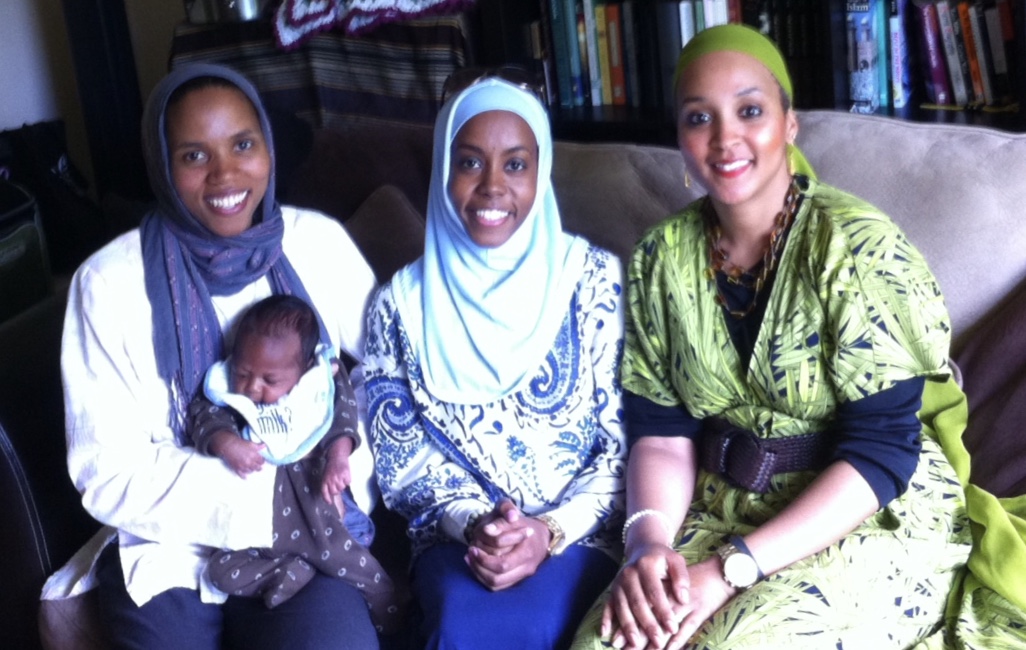 |
| May 2013, The year I prayed to be Hagar (Smile) |
“Being
with Hagar”
Fullness flowing everywhere,
My hand in her hand,
Fullness flowing everywhere,
My hand in her hand,
My
slender arm wrapped in her fullness as her baby sucks the milk that Allah gave,
Our hearts occupied with the remembrance of Allah,
Our hearts occupied with the remembrance of Allah,
Our
eyes on the Awliya’ Allah,
Our
bodies at the house of Allah,
All other desires,
All other desires,
The
remembrances of all other beloveds,
They
stream down into this single gushing river,
This love came out of dying,
Out of intense longing,
It came when my heart was broken,
And I
could only turn to God,
It came
when I became Hajar,
Left in
the desert with only God to fall on,
This love came like Zamzam,
This love came like Zamzam,
Out of
nowhere, making it utterly Divine,
It is the love that pilgrims drink from,
Pure because the source is Pure,
It is the love that pilgrims drink from,
Pure because the source is Pure,
Allah
is the Holy One,
Blessing
this love,
Elevating
this love,
Giving me life,
Giving me life,
Turning
me to Allah and His Beloved,
Through him, Sallalahu alayhi wasssalam,
Through the Beneficent King, the Holy One,
Through her, may Allah bestow peace on Hagar,
I have tasted the sweetness of Iman,
And
have been led to the path of Ihsan,
Where I
am living and dying,
For the
Face of Allah.
 |
| April 2017, Goree Island, Senegal |
*Please
pray for me and my book tentatively titled, Radical
Love: Sufi Reflections on Heartbreak and Happiness.
Wednesday, August 22, 2018
The Mother’s Sacred Sa’i: Lessons from Hajar (R) on Balancing Work and Family
By
Bint Jobaida

My
toddler squats her legs and does a little shimmy. She looks like she is doing a
yoga pose and I can’t help but join the fun. My eight year old runs around like
she’s on fire, looking for a pool of water to dive in. She says, “You’re
the best mom” and “I love you” like she is saying hello. My eleven year old is
a wise little owl who likes to write poetry at night. I look at her and wonder,
What will she be when she grows up? I
notice these things because I’m on leave from my full-time job at a small
liberal arts college. I love tuning into my kids, especially as they, and I,
get older, but the decision to stay home this year was not an easy one. I feel
torn, like most of my peers, by the sa’i (a ritual passage or walking)
between home and work.
When
I was going back and forth between work and home last year, I turned to the
story of Hajar for guidance on how to balance the demands of motherhood with
the challenges of working to provide sustenance. At the core of Hajar’s
story is a model of working hard, staying close to one’s child(ren) and
trusting in God’s bounty. Hajar’s work of running between Safa and Marwa,
or sa’i, is eventually rewarded with the spring of Zamzam appearing next to her
son Ismail. Her story provides a hopeful narrative of motherhood leading to
community and prophecy. Hajar shows us that the struggle of women who work and
take care of their children is made possible by turning to God and asking Him
for the resources that will sustain the mother, child and the community.
Hajar’s
Story
Hajar
joined the household of Ibrahim and Sarah after they visited the King of Egypt.
She was given as a gift to Sarah because God protected Sarah from the King’s
sexual advances by freezing his hands, making him fearful of her power. Ibrahim
and Sarah had difficulty conceiving a child so Sarah permitted Ibrahim to marry
Hajar in the hopes that he might have an heir. This led to the birth of Ismail,
whose progeny would be Muhammad (sws). Soon after, Ibrahim was given a
revelation from God to take Hajar and Ismail away from the household of Sarah.
Ibrahim
takes Hajar to a desert where there appears to be no one and leaves her there
with Ismail. You might wonder, as did Hajar, why Ibrahim would leave Hajar in
the middle of the desert when she had just given birth to his son? This brings
a turning point and a spiritual trial for Hajar, who must figure out why she is
alone and what she must do in this barren land. She is confused by Ibrahim’s
decision to leave her and questions him, “Did
Allah command you to do this?” to which he replies, “Yes.” She then says, “Then
certainly, He will not abandon us.”
Ibrahim
had a history of taking an unfamiliar path to illustrate his faith in Allah,
even if it meant putting himself or his family in what appeared to be
impossible circumstances. He repeatedly relies on Allah to fashion a protection
between him and his loved ones and trusts that some divine providence will come
forth from the uncertain circumstance. This is seen in the story of his
struggle against the idol worshippers as well as later in his willingness to
sacrifice Ismail. This also creates a similar pattern of faithfulness and
willingness to submit in his wife and children. When Hajar hears that the
command is from Allah for Ibrahim to leave her in this location, she feels at
peace and accepts it.
Hajar’s
faith in Allah plays an important role in helping her survive the desert
environment with a baby. When their provisions run out, Hajar begins to run
back and forth between Safa and Marwa until the seventh pass, when a spring of
water appears next to the baby. Some narrations say that Ismail, with the help
of Angel Jibreel, kicks at the earth to discover the spring. The water draws
birds and the birds attract a nearby caravan that decides to settle down near
the spring. Soon, Ibrahim returns as well to live with Hajar and Ismail and to
build the Ka’ba. This happy ending came as a result of Hajar’s and Ibrahim’s
faith in Allah (swt).
Lessons
from Hajar’s Sa’i for Working Mothers
I
would like to draw some lessons from Hajar’s sa’i and her trust in Allah for
the contemporary working mother. Hajar’s story is compelling because she
has to move away from her child in order to find sustenance for her child, but
then is able to come and be with her child when the sustenance appears next to
the child. Hajar's reality is the same as that of many working mothers today.
Working mothers can go only so far as we feel comfortable leaving our children,
but we find relief when we are with our children enjoying the provisions that
Allah alone provides.
Hajar's
story offers a lesson on how to move (apropos, since her name means migration)
in this situation. First, she shows us that there will be times where the
struggle for sustenance is borne by the mother alone and she can and will work
hard to find sustenance for her children by making the sa’i between work and
home. Second, Hajar reinforces the natural instincts of women to care for and
be close to their children by performing the sa’i and then returning to the
child. Third, Hajar's effort in running between Safa and Marwa were a necessary
precursor to the wellspring eventually sprouting near the child. And maybe most
importantly, the wellspring, which symbolizes Allah’s bounty, produces a
community that supports the child and the mother.
The
Sa’i of the Single Mother
I
have seen the lessons of Hajar in the case of my own mother who was a widow at
the age of 28 with two children. She found herself in the United States alone
without her parents or her siblings. My mom ran between two places, the US and
Bangladesh, after my father passed away. She was uncertain about what to do.
Should she live off the charity of her family or stay in the US and make a life
for herself and her children as her husband and she had dreamed?
After
making several sa’is between the two countries, she chose the place she thought
would bring resources for her children. And she was right. She found herself
strengthened by faith in God and a beautiful community to help raise her
children in. Her faith grounded her in a time of crisis and she found helpers
and fellow immigrants who gave her rides, taught her how to drive and helped
her get on her own two feet. My mom's chosen career of a home childcare
provider also allowed her to keep an eye on us and provide for our family.
Eventually, my cousin joined her and helped her financially and helped my
brother and I become self-sufficient. Hajar's lesson of working when you need
to, staying close to your children and having faith resulted in my mom's
greatest wellspring, her children’s future success and the creation of a
community.
The
Sa’i of the New Mom
I
also found comfort in Hajar's story when I had my third child in January 2016
and returned from maternity leave to work at a small college in a predominantly
white, rural part of Northwest Pennsylvania. I had never been so far away
from my family when I had my two previous children. I felt a bit like Hajar,
left in the desert alone with my children. As a new mom, I felt a strong
physical pull to be near my daughter and to nurse her and take care of her.
Hajar’s sa’i symbolically represents the internal and external pressures
new working moms face. Their bodies are transitioning into a new place of
providing sustenance for a baby, but then they are met with the demands of the
workplace where they must also produce.
When
I started the sa’i between work and home again, I felt Hajar’s fear, distress
and fatigue as I ran from work to home, stopping to nurse my baby in between sa’is
from breasts that were not producing enough milk. So I decided to do the
unthinkable, admit that I couldn’t work full time while nursing. I asked for a
leave of absence from work and focused on nursing myself and my daughter.
And similar to Hajar, I found the spring of Zamzam appear next to
my child, a signal that I could now rest and tend to her needs and to my own
needs. When I was with my daughter, I felt a sense of peace and rightness with
the world and a feeling of rida, contentment.
What happened next was amazingly
similar to Hajar’s story. My boss was very understanding and my colleagues
stepped in to take care of my classes. I was able to negotiate returning to
work half time in the next semester and a leave of absence the following school
year. This would help me adjust to having a baby and make some important
decisions about whether working full time was the best use of my time at this
stage in my life. I was grateful to Hajar for
modeling what it means to struggle with the difficulties of providing for one’s
children, while also staying close to them and having faith that God alone
provides.
Hajar’s Sa’i as a Lesson for Contemporary Mothers
I want it to be clear from these stories that all moms experience
the sa’i, whether they stay home, work part-time or are the primary
breadwinners of their families. This reflection is not about the question of
whether to work or stay at home, but rather where your intention is when you
choose to work. Is it to please your Creator and recognize that material and
spiritual sustenance come from Allah alone? Or is it to make money and provide
material comforts for you and your family? These are hard questions to ask
ourselves, especially when we feel overburdened by the many demands placed on
us.
Hajar’s sa’i allows us to reflect on these questions and to see
what she did when placed in a position of being the sole provider for her
family. She did the work of going between safa and marwa, all the while praying
to Allah (swt) to send His mercy to them. She realized that she must teach her
children lessons of how to work, while also recognizing our Creator as the
source of all things. If you follow Hajar’s example, you transform your relationship
to your Creator and to your children, which ultimately gives them a source of
support that will never run dry.
I want to end with the reminder that Hajar is a model for both men
and women, and the sa’i is a symbol of any struggle we face when we are looking
for divine mercy. I hope that my reflections have helped in some way as you
make your personal sa’i to be more connected to Allah (swt), the source of all
sustenance. I pray that this Hajj and Eid are a source of reflection and
learning for all of us as we experience, witness and remember the many
sacrifices Ibrahim (s), Hajar (r) and Ismail (s) made for this ummah. Without
their faith in what is possible when you rely on Allah (swt), Muhammad (sws)
and his ummah would not be in existence today. May Allah (swt) make us among
the followers of Hajar, Ibrahim and their descendants. Ameen.
Wednesday, August 8, 2018
Let’s Talk about Relationships! Taboo Talk: The Night Social @ CLF 2018
By Ayisha Karim


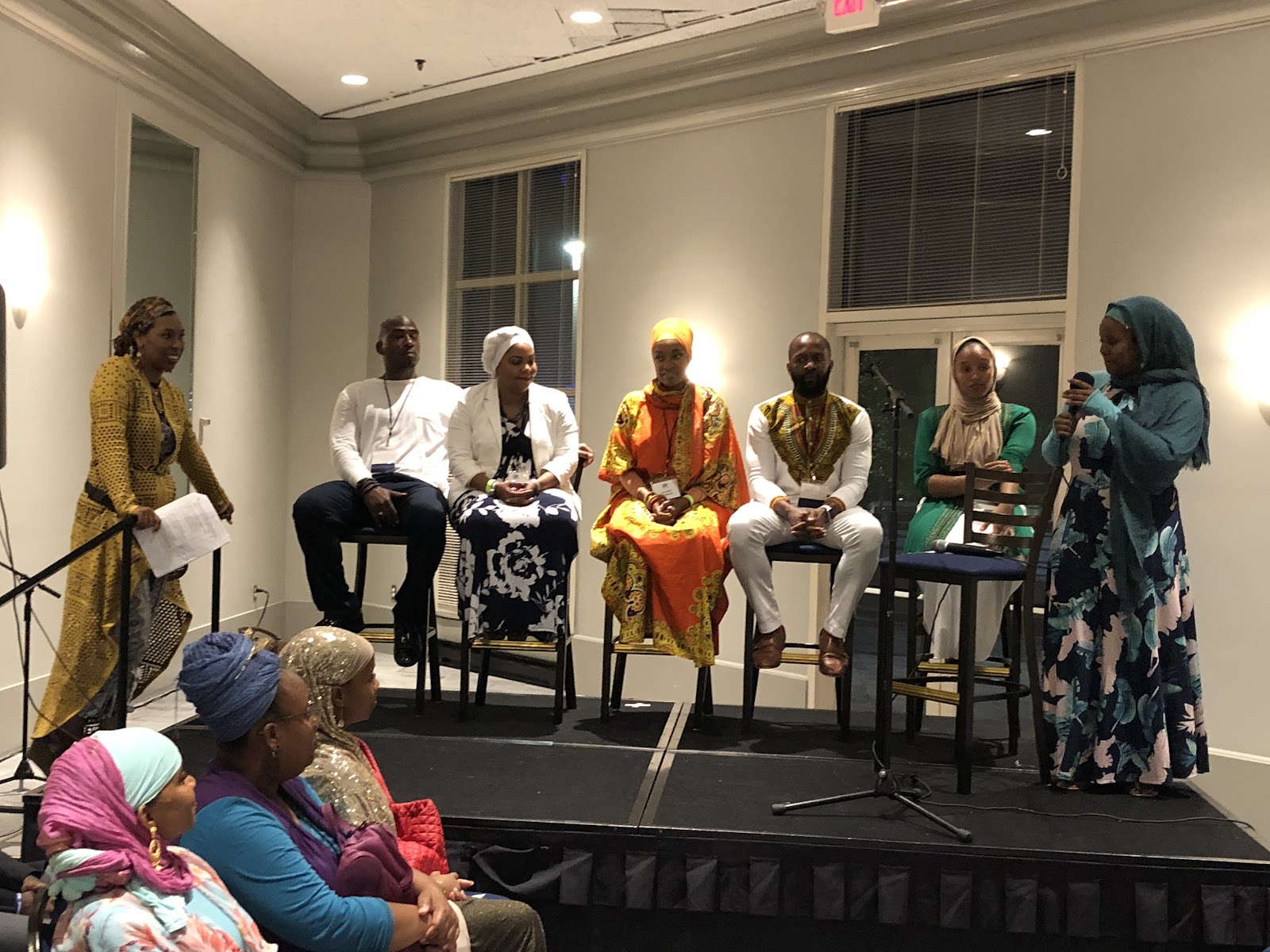
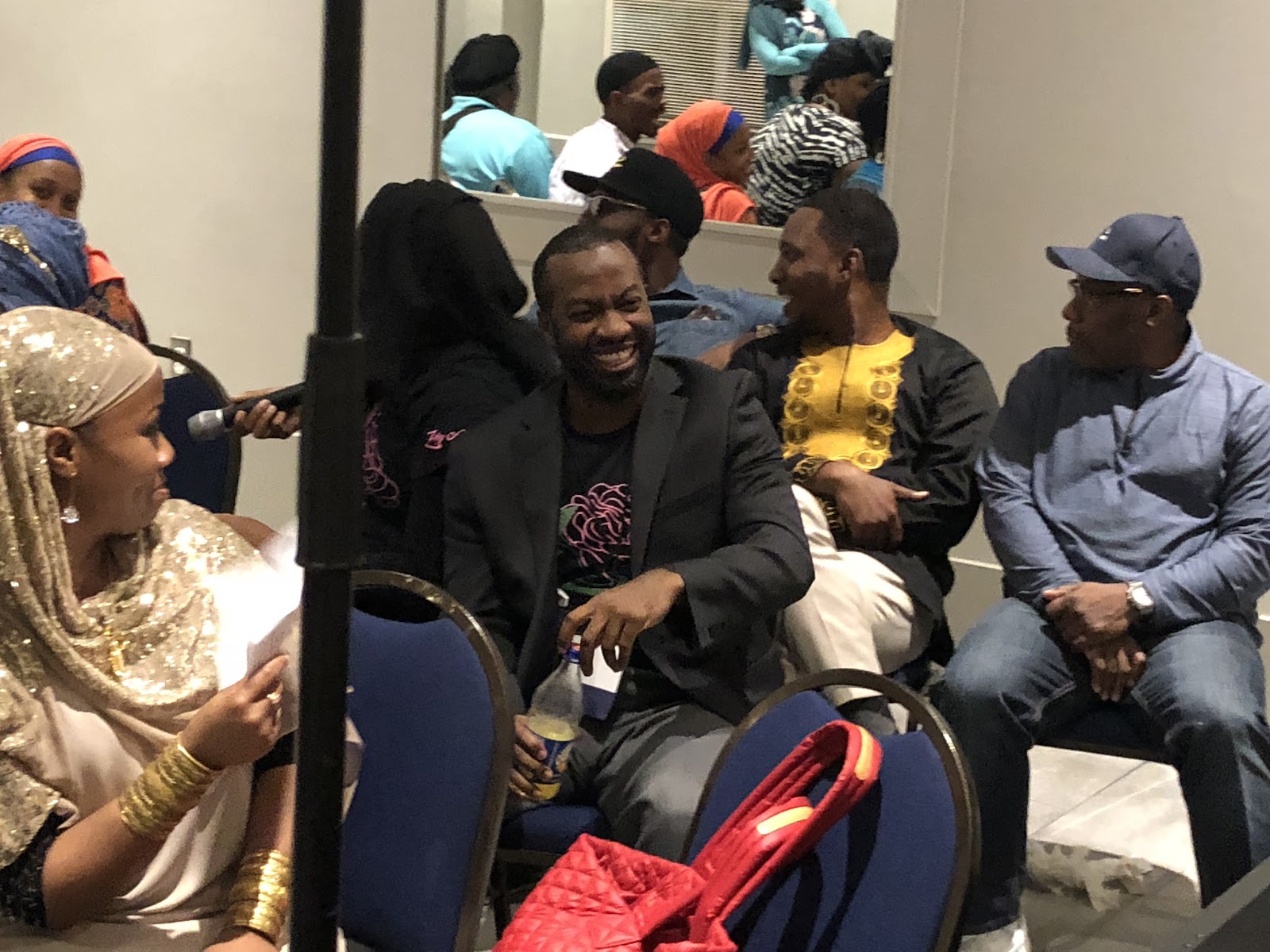
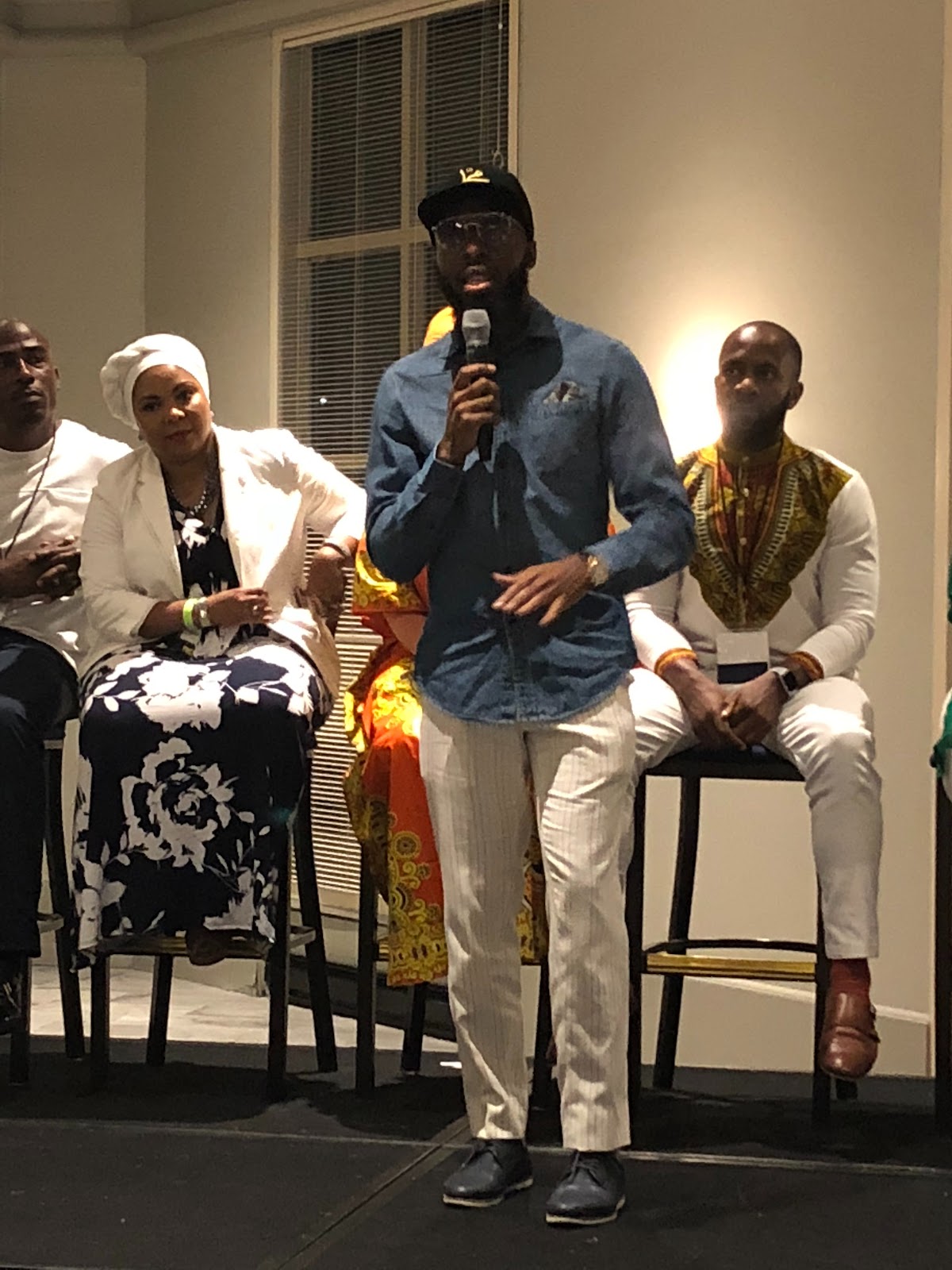
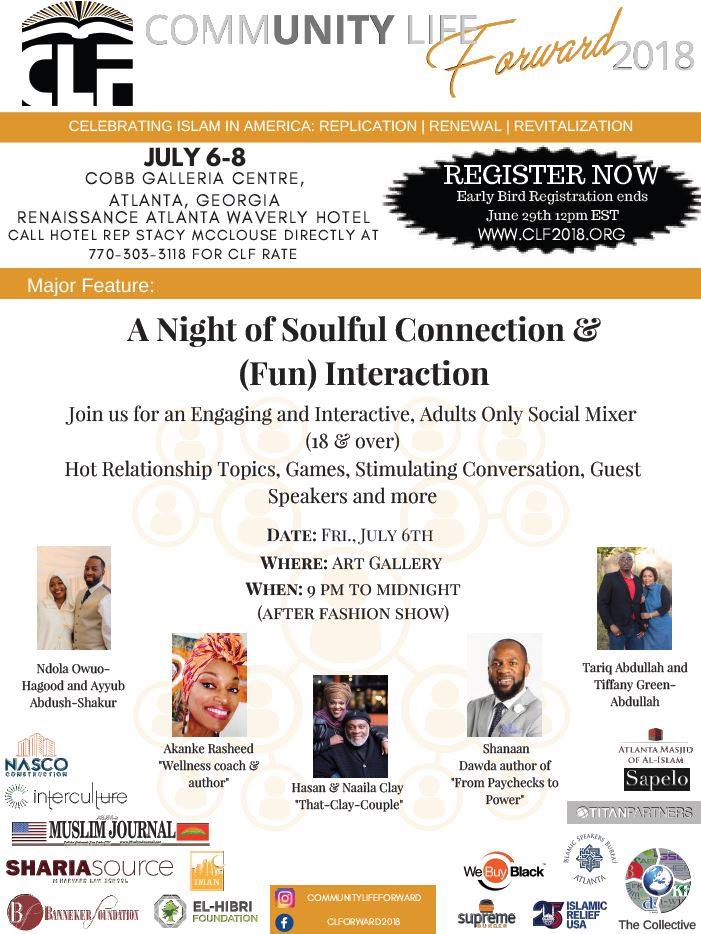

One month ago, the third annual CLF (Community Life Forward) Conference was held in Atlanta, Georgia, on 4th of July weekend, July 6-8th. The theme was Celebrating Islam in America: Replication, Renewal, & Revitalization.
Eight months
prior at the first meeting of the convening council in Baltimore (October
2017), we were asked to share why we accepted the invitation to organize. I
expressed, at that time, that my primary reason was to develop
programming around family life in our Muslim communities, with
particular focus on the institution of marriage, healthy, successful marriages
at that.
Gathered in a
conference room at John Hopkins Business School, a group of us gave
heart-warming testimonies about how we met our current or former spouses at
such conferences while in college or in our twenties, and formed lifelong
friendships with other Muslims from around the country.
Such
conferences played a critical role in cultivating high esteem in terms of how
we saw ourselves as second generation, African-American Muslims. Yet, many of
us, at the same time, agreed that unfortunately there has been a decline in the
frequency and quality of such social interactions for our children’s
generation, African-American Muslim millennials and younger.
Thus, I was
assigned the task to lead the Family Life committee for CLF ‘18. As critical as
family life is to community life, to our surprise, when it was all said and
done, the Family Life committee was asked to execute only one major
event: the CLF Social.

The National
Planning Council decided to primarily focus on the four top tier areas:
Business, Education, Social Justice, and Community Development. Family Life was
placed in the second tier of important CLF programming.
Prior to this
placement, when committee heads were asked to submit proposals for their
portion of the conference, our committee drafted a proposal that was oozing
with relevant, juicy, and pressing family issues such as raising conscious
Muslim youth, building community life, increasing access to courtship, mental
health, recovery after divorce and polygyny, and more.
We also
offered an amazing list of possible speakers, forums, and panelists to make it
rich, impactful, and memorable. Yet, in the end, main conference organizers
informed us that as a second-tier committee, there just wasn’t space in the
program for what we’d envisioned.
When the
co-organizers and I became aware of this decision, we decided to pack our social
with as many juicy topics that we could possibly entertain in the two hours
allotted us. We settled on the name, “A Night of Soulful Connection
& (Fun) Interaction.”
I received
this name from one of the older Muslim sisters on a yoga retreat in Costa Rica
late June while sitting around the dinner table, after telling them about this
event and what we envisioned. We all loved the name immediately! Past
conference socials usually catered to your variety of single & looking or
interested Muslim folk. We decided to make the Social for ALL adults, 18 years
and up (vs. the over 30 & up we initially planned). Plus, get this: single
AND married!
The two other
female organizers were Aseelah Rashid (Atl, GA) and Nabeehah Azeez (Baltimore,
MD). To ensure that the social was relaxed, informative, provocative,
entertaining, and beneficial, we decided to mix it up a bit: icebreaker BINGO,
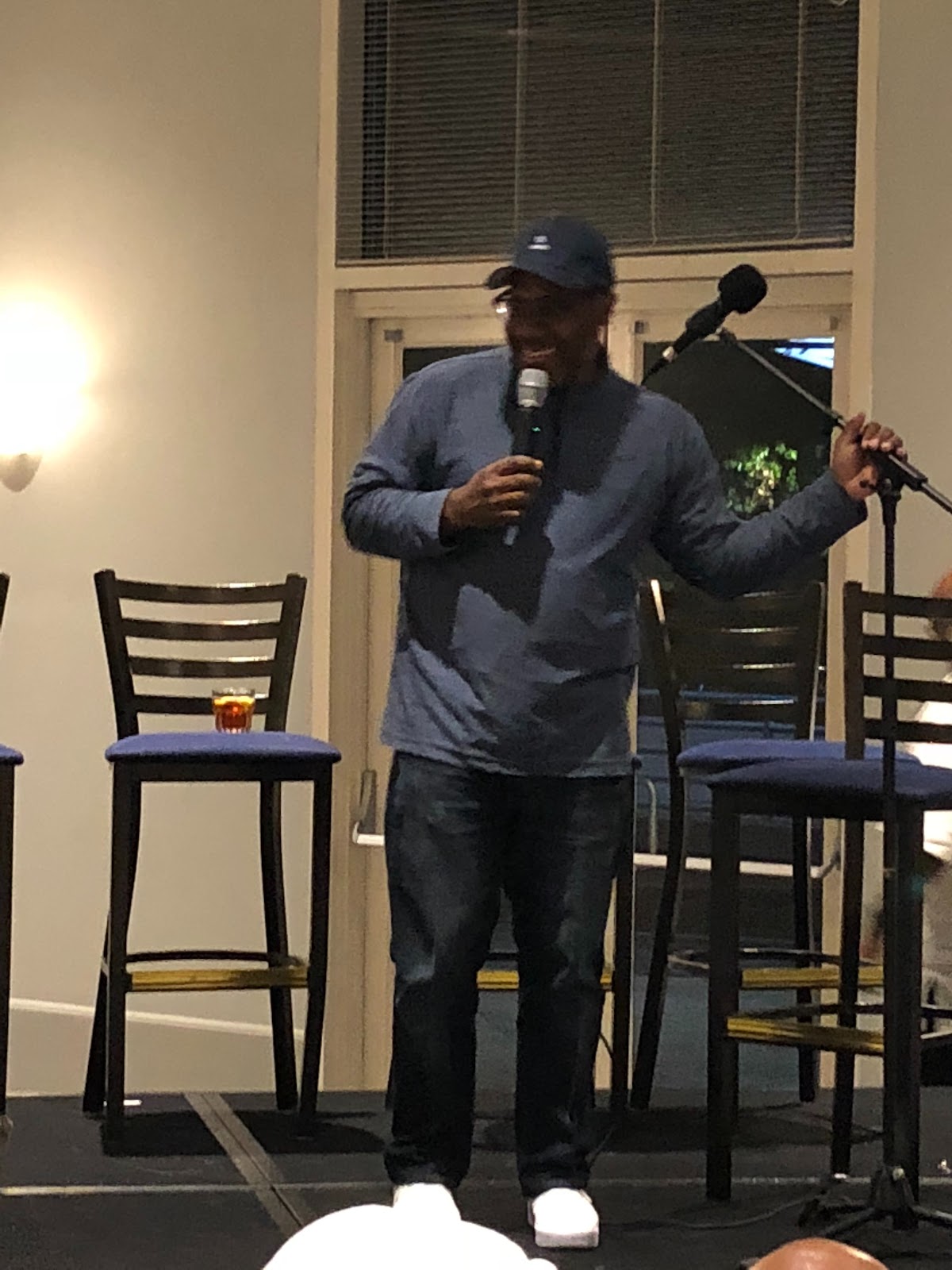
stand-up comedy (Preacher Moss), a panel of relationship “experts,” SCENARIOS,
and spoken word/poetry reading.
This leads me
to the main point of this blogpost: the SCENARIOS, thoughtfully crafted by the
members of our expert panel (seen in the photos here) and read to the audience
by one of the three facilitators. But not just the “experts” came up with these
SCENARIOS. I solicited the insight of a special male friend, who shared several
‘real’ scenarios as well. And yes, I’ll admit, I even threw one or two in
there, with the help of a dear friend who stayed with me that weekend, and
who’s been dealt a very similar hand at this stage in our lives.
Below, you can
find a select sampling of these scenarios. I’ll try to put them in the order in
which they were read to our audience. I encourage you to guess which scenario
got the most attention, i.e., was deemed most discussion-worthy and
provocative to our guests. Enjoy!
Scenario #1:
You see your
friend’s husband/wife on what appears to be a date with another woman/man. Do you 1) walk up to the husband/wife on
the spot and confront them, 2) give the wife/husband a call and tell them what
you think you saw, or 3) say NOTHING in hopes of saving their marriage?
Scenario #2,
Parts A & B:
As Muslim
parents raise their children to be celibate, how do Muslim married couples
later discuss intimacy, pleasure, and explorations of pleasure and the breadth
of interpretation within Islam? What happens when Muslims, who are reverts, have a previous way of
doing things, and marry someone born into the faith and are told one
thing, not knowing what degrees of pleasure should be explored or how to
respond to the other person’s shyness?
A Muslim
brother and sister, interested in one another, have different levels of sexual
needs. One person is
looking at a holistic approach, recognizing time and place, while the other
wants sex all the time and may or may not have an addiction, depending on how
the individuals perceive sex and intimacy.
Scenario #3:
Your wife
is a revert who grew up in a household where her father was a philanderer and
her mother caught him having affairs. Growing
up in such an environment causes her to have issues with trusting men. She is
prone to jealousy and suspicion of relationships you have with females in your
line of work, which affects the harmony in your marriage. You love her
dearly but are frustrated with her issues of jealousy. Although you have to interact with sisters
often, you are faithful. How do you deal
with the situation?
Scenario #4:
You have
been courting your potential mate for about 2 months now. You guys get along
great when it comes to chemistry, casual conversations, Deen [religion] and
similar outlooks on life. One area that tends to cause a lot of tension is how
you both handle money. One of you comes from a background of struggle and trying to
make ends meet and the other comes from the an upper middle class background,
never really having to worry about managing their money because they have
always been good. Is this a big enough difference to call things off or do you
try to work through this area of challenges?
Scenario #5:
How do you
handle both being professional business people and each interacting with the
opposite sex and non-Muslims?
BONUS
Scenarios/Q’s (i.e., on the script but never shared
due to lack of time)
A few years
into your marriage, your husband hints at the possibility of polygyny. Ultimately, you are NOT open to it even
though your religion allows for it, done “appropriately.” When he insists that
he wants to take on a second wife for good reasons, you find yourself inclined
to tell him that you’d RATHER that he court a woman privately (on the side) BUT
not marry her, by all means. At what point do you choose between giving your
husband your blessings on moving forward with polygyny AND leaving him open to
other options OUTSIDE of the Islamic framework?
What are
some good steps for an individual to take when preparing to get married? Would you take the recommendation of a
respected member of the community who suggests to your parents that you and
someone else would be compatible for marriage? What are some recommendations to
help the love grow in a marriage for couples? What are some important things to
discuss when courting someone?
As you can
probably imagine, our guests got way more out of the social than they
anticipated, walking in late that Friday night after 9pm. We received many
comments and/or reactions, prior to and at the end, expressing concern around
the limited nature of such opportunities for discussions around Muslim family
life and relationships. Our own Muslim security team told us that we had
to be out of the Art Gallery, where the event was held, by 11:30 pm. We closed
the event with a love poem, recited by Youssef Kromah from his book Woke.
Guests left
the gallery that night buzzing with unfinished & unresolved discussion,
laughter at what they’d heard, and inspired to continue the conversations with
their spouses, family, friends, and community members, and looking forward to
CLF Social Event 2019/2020! Insha-Allah.
#HagarLives
Subscribe to:
Posts (Atom)