Wednesday, August 8, 2018

Let’s Talk about Relationships! Taboo Talk: The Night Social @ CLF 2018

By Ayisha Karim


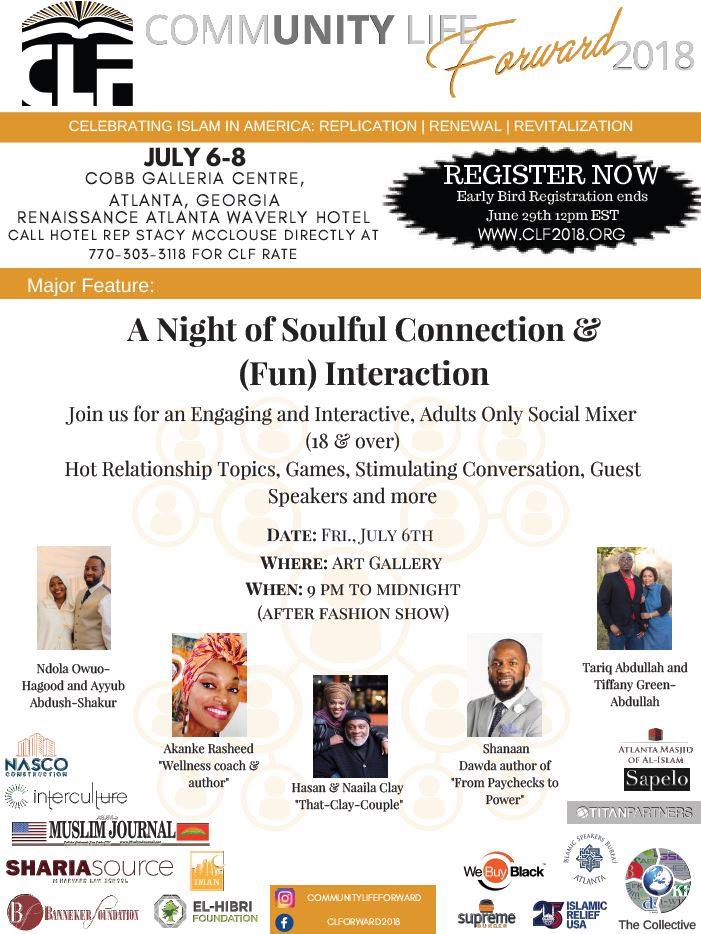
One month ago, the third annual CLF (Community Life Forward) Conference was held in Atlanta, Georgia, on 4th of July weekend, July 6-8th. The theme was Celebrating Islam in America: Replication, Renewal, & Revitalization.

Eight months prior at the first meeting of the convening council in Baltimore (October 2017), we were asked to share why we accepted the invitation to organize. I expressed, at that time, that my primary reason was to develop programming around family life in our Muslim communities, with particular focus on the institution of marriage, healthy, successful marriages at that.

Gathered in a conference room at John Hopkins Business School, a group of us gave heart-warming testimonies about how we met our current or former spouses at such conferences while in college or in our twenties, and formed lifelong friendships with other Muslims from around the country.

Such conferences played a critical role in cultivating high esteem in terms of how we saw ourselves as second generation, African-American Muslims. Yet, many of us, at the same time, agreed that unfortunately there has been a decline in the frequency and quality of such social interactions for our children’s generation, African-American Muslim millennials and younger.

Thus, I was assigned the task to lead the Family Life committee for CLF ‘18. As critical as family life is to community life, to our surprise, when it was all said and done, the Family Life committee was asked to execute only one major event: the CLF Social.


The National Planning Council decided to primarily focus on the four top tier areas: Business, Education, Social Justice, and Community Development. Family Life was placed in the second tier of important CLF programming.

Prior to this placement, when committee heads were asked to submit proposals for their portion of the conference, our committee drafted a proposal that was oozing with relevant, juicy, and pressing family issues such as raising conscious Muslim youth, building community life, increasing access to courtship, mental health, recovery after divorce and polygyny, and more.

We also offered an amazing list of possible speakers, forums, and panelists to make it rich, impactful, and memorable. Yet, in the end, main conference organizers informed us that as a second-tier committee, there just wasn’t space in the program for what we’d envisioned.

When the co-organizers and I became aware of this decision, we decided to pack our social with as many juicy topics that we could possibly entertain in the two hours allotted us. We settled on the name, “A Night of Soulful Connection & (Fun) Interaction.”

I received this name from one of the older Muslim sisters on a yoga retreat in Costa Rica late June while sitting around the dinner table, after telling them about this event and what we envisioned. We all loved the name immediately! Past conference socials usually catered to your variety of single & looking or interested Muslim folk. We decided to make the Social for ALL adults, 18 years and up (vs. the over 30 & up we initially planned). Plus, get this: single AND married!

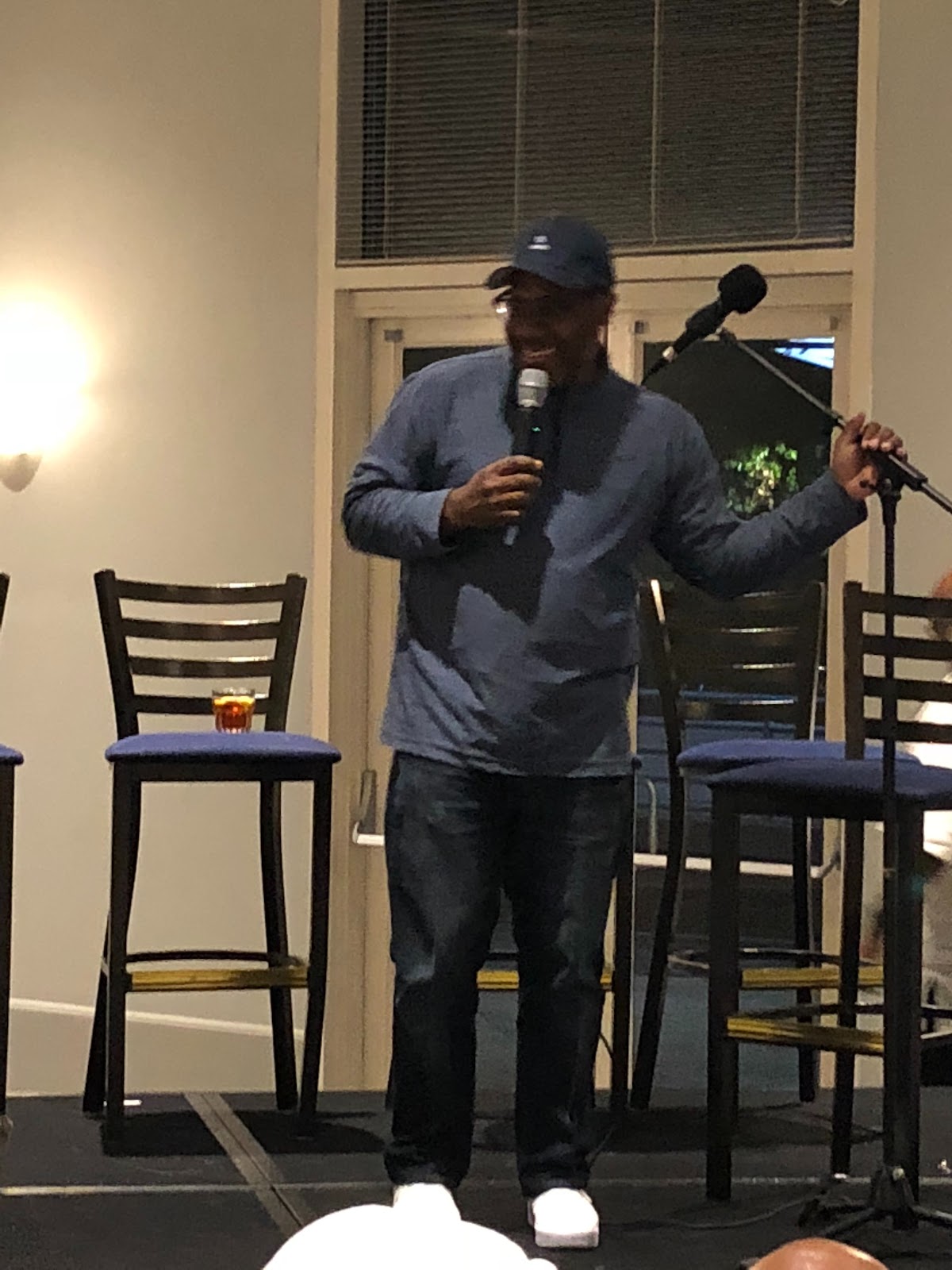
The two other female organizers were Aseelah Rashid (Atl, GA) and Nabeehah Azeez (Baltimore, MD). To ensure that the social was relaxed, informative, provocative, entertaining, and beneficial, we decided to mix it up a bit: icebreaker BINGO, stand-up comedy (Preacher Moss), a panel of relationship “experts,” SCENARIOS, and spoken word/poetry reading.
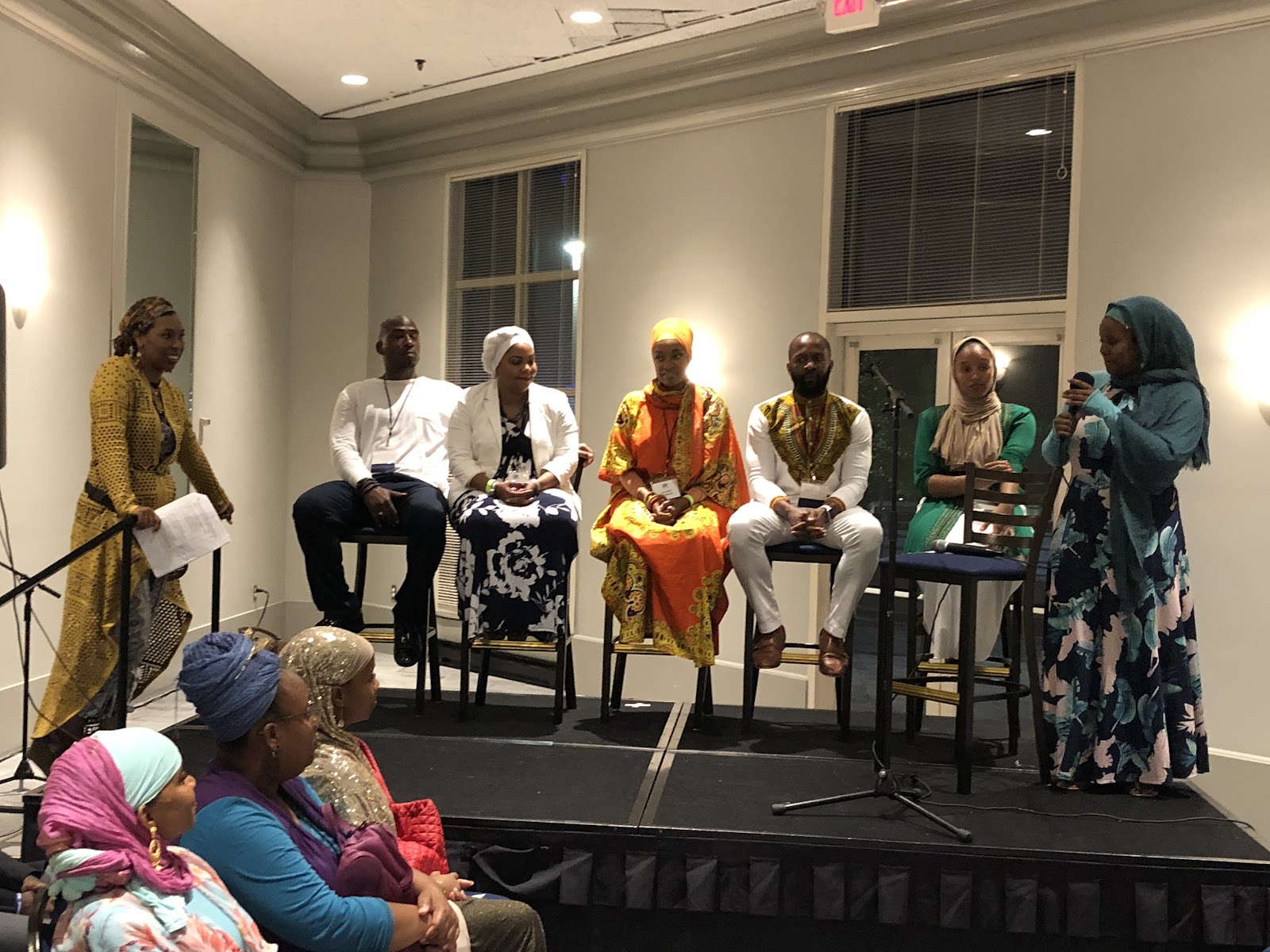

This leads me to the main point of this blogpost: the SCENARIOS, thoughtfully crafted by the members of our expert panel (seen in the photos here) and read to the audience by one of the three facilitators. But not just the “experts” came up with these SCENARIOS. I solicited the insight of a special male friend, who shared several ‘real’ scenarios as well. And yes, I’ll admit, I even threw one or two in there, with the help of a dear friend who stayed with me that weekend, and who’s been dealt a very similar hand at this stage in our lives.

Below, you can find a select sampling of these scenarios. I’ll try to put them in the order in which they were read to our audience. I encourage you to guess which scenario got the most attention, i.e., was deemed most discussion-worthy and provocative to our guests. Enjoy!

Scenario #1:
You see your friend’s husband/wife on what appears to be a date with another woman/man. Do you 1) walk up to the husband/wife on the spot and confront them, 2) give the wife/husband a call and tell them what you think you saw, or 3) say NOTHING in hopes of saving their marriage?

Scenario #2, Parts A & B:
As Muslim parents raise their children to be celibate, how do Muslim married couples later discuss intimacy, pleasure, and explorations of pleasure and the breadth of interpretation within Islam? What happens when Muslims, who are reverts, have a previous way of doing things, and marry someone born into the faith and are told one thing, not knowing what degrees of pleasure should be explored or how to respond to the other person’s shyness?

A Muslim brother and sister, interested in one another, have different levels of sexual needs. One person is looking at a holistic approach, recognizing time and place, while the other wants sex all the time and may or may not have an addiction, depending on how the individuals perceive sex and intimacy.

Scenario #3:
Your wife is a revert who grew up in a household where her father was a philanderer and her mother caught him having affairs. Growing up in such an environment causes her to have issues with trusting men. She is prone to jealousy and suspicion of relationships you have with females in your line of work, which affects the harmony in your marriage.  You love her dearly but are frustrated with her issues of jealousy.  Although you have to interact with sisters often, you are faithful.  How do you deal with the situation?

Scenario #4:
You have been courting your potential mate for about 2 months now. You guys get along great when it comes to chemistry, casual conversations, Deen [religion] and similar outlooks on life. One area that tends to cause a lot of tension is how you both handle money. One of you comes from a background of struggle and trying to make ends meet and the other comes from the an upper middle class background, never really having to worry about managing their money because they have always been good. Is this a big enough difference to call things off or do you try to work through this area of challenges?

Scenario #5:
How do you handle both being professional business people and each interacting with the opposite sex and non-Muslims?

BONUS Scenarios/Q’s (i.e., on the script but never shared due to lack of time)

A few years into your marriage, your husband hints at the possibility of polygyny. Ultimately, you are NOT open to it even though your religion allows for it, done “appropriately.” When he insists that he wants to take on a second wife for good reasons, you find yourself inclined to tell him that you’d RATHER that he court a woman privately (on the side) BUT not marry her, by all means. At what point do you choose between giving your husband your blessings on moving forward with polygyny AND leaving him open to other options OUTSIDE of the Islamic framework?

What are some good steps for an individual to take when preparing to get married? Would you take the recommendation of a respected member of the community who suggests to your parents that you and someone else would be compatible for marriage? What are some recommendations to help the love grow in a marriage for couples? What are some important things to discuss when courting someone?

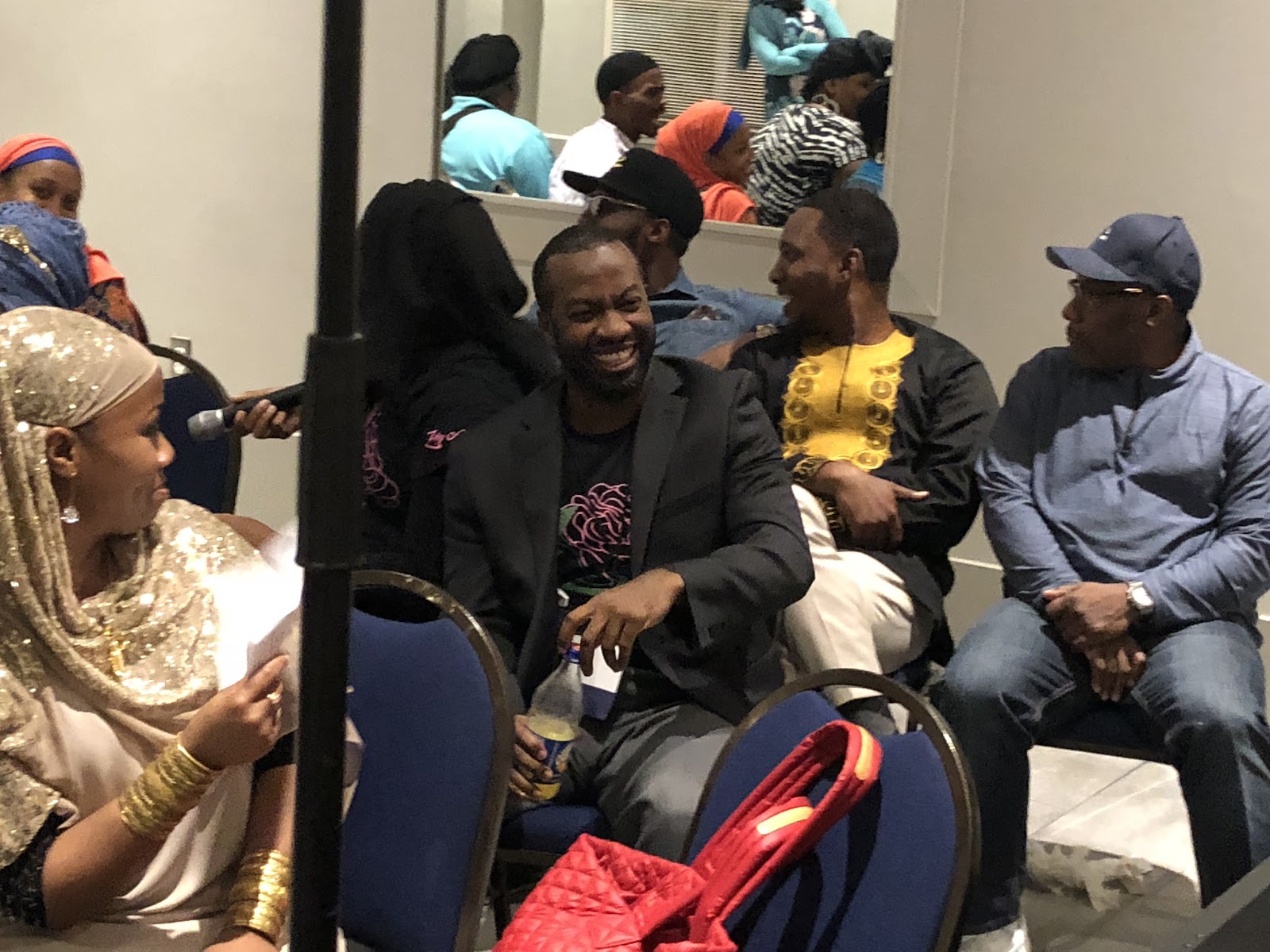
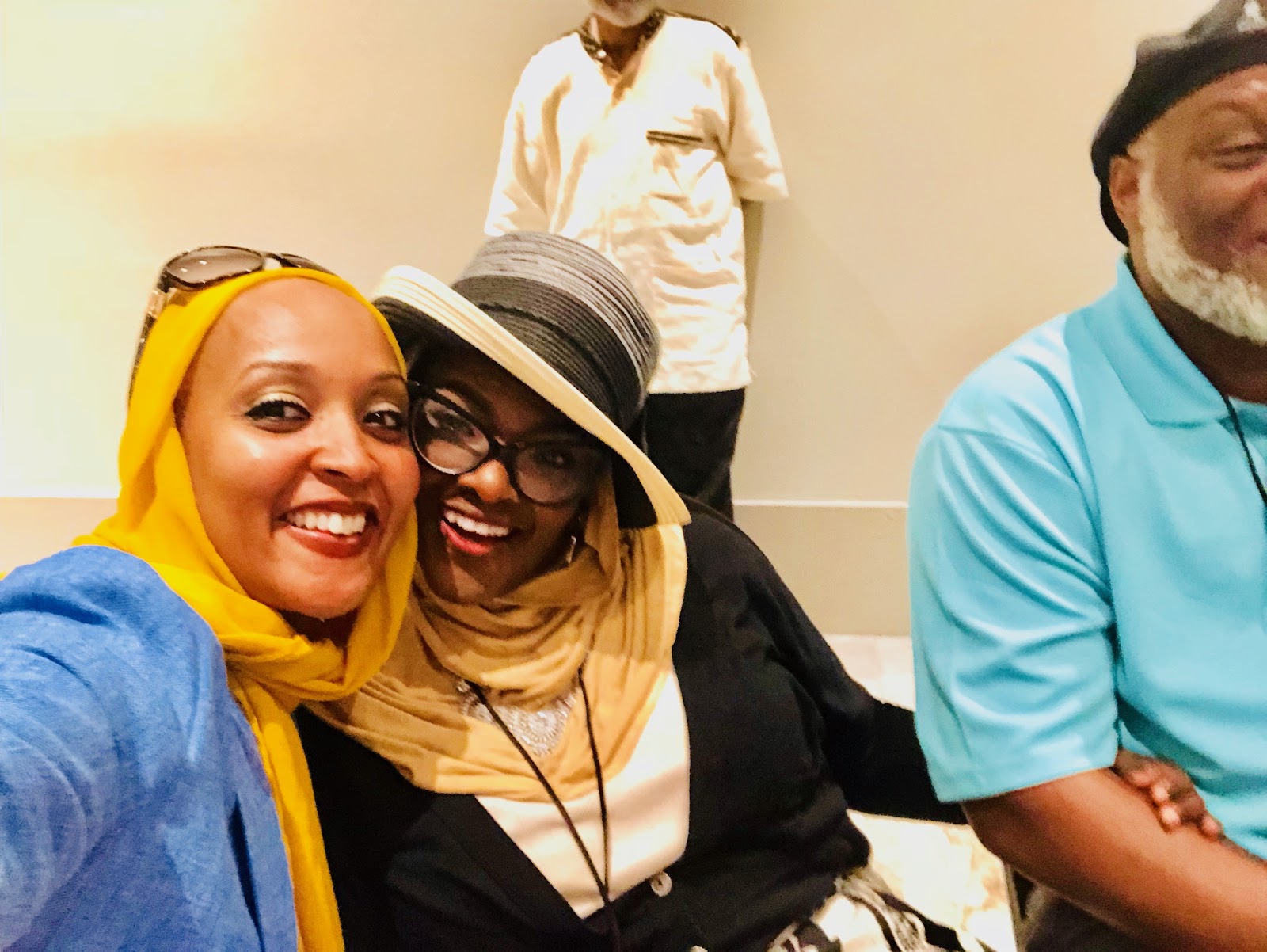
As you can probably imagine, our guests got way more out of the social than they anticipated, walking in late that Friday night after 9pm. We received many comments and/or reactions, prior to and at the end, expressing concern around the limited nature of such opportunities for discussions around Muslim family life and relationships. Our own Muslim security team told us that we had to be out of the Art Gallery, where the event was held, by 11:30 pm. We closed the event with a love poem, recited by Youssef Kromah from his book Woke.
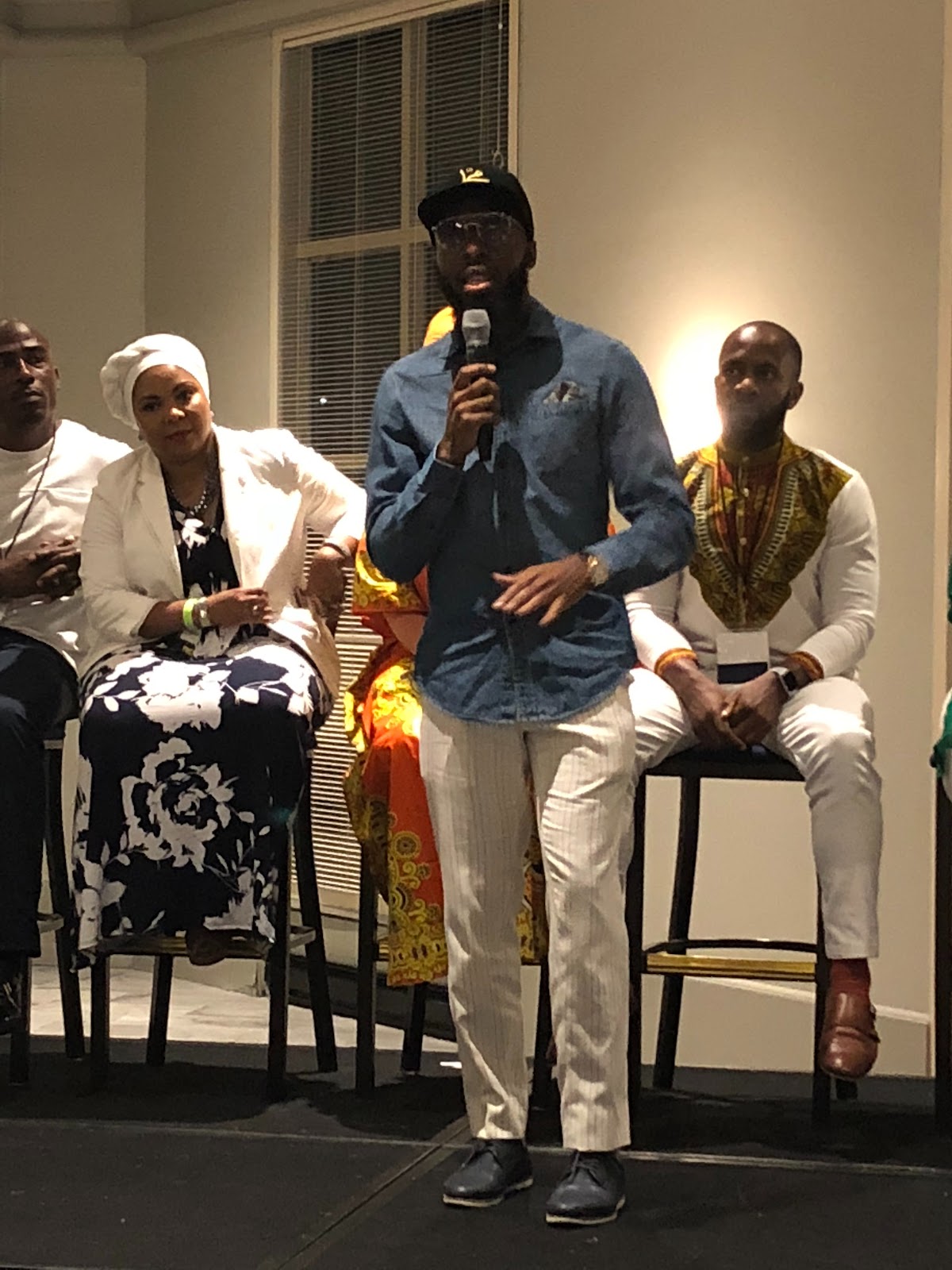


Guests left the gallery that night buzzing with unfinished & unresolved discussion, laughter at what they’d heard, and inspired to continue the conversations with their spouses, family, friends, and community members, and looking forward to CLF Social Event 2019/2020! Insha-Allah.

#HagarLives


Monday, May 21, 2018

American Muslim Women, Still Relevant Ten Years Later


Alhamdulillah, I was quite pleased and grateful to discover these 2018 amazon reviews of my first book, American Muslim Women: Negotiating Race, Gender and Class Within the Ummah.


Dr. Jamillah Karim speaks truth to power! This brilliant book has become a cornerstone of my library and played an immense role in my return to academia as it sheds light on the lived experiences of Muslim women in America. By focusing on Muslim women within in their religious spheres along with the imbrication of race, gender, class and age--Dr. Karim delivers a richly textured account of and on American Women as they negotiate so many facets of their identity.

By fully, confronting the intra-Muslims racism of American Islam, Dr. Karim has created an opening for a new genera of study and long overdue discussion on this very real issue.

This book is perfectly suited for the non-academic as well as those within. Her brilliant methodologies foster an accessible reading.

Above all, Dr. Karim sheds light on the eloquent and nuanced dance of identity negotiation(s) that all Muslim women must perform in the richly diverse context of America. One of my all time favorite books!


Ananda W, March 2018

Ground-breaking study on gender and interminority relationships. A bold move away from studies that give a "portrait" of one particular ethnic minority. Also brings an important class analysis. A must read for religious studies, American and ethnic studies and the study of Islam more generally.

Dr. Su’ad, March 2018

Sunday, May 13, 2018

How I Kept My Muslim Faith Through the College Years: A tribute to mothers, a message to the youth


Duke University
Black Graduation Ceremony, 1997
With DST sorors, Lambda Omega Chapter, Spring '95


The sweet Mama who made it all possible, by Allah


This post is a transcript of a speech I gave to the 2018 Graduates of WDM High School
Mother's Day 2018
Senior Ta'leem: "The Wombs That Bore You"
With my sister Ayisha, also a WDM High and Duke alumna

It was May 1993 when I stood where you are today. I was in the second graduating class of W.D. Mohammed High School. Our graduation theme was “Rooted in Faith, Growing in Excellence.” I dedicated my speech to my mother, a faith-filled woman who had the vision to see that we as a community could educate our own.

As you know, not everyone had this vision, not everyone believed that dreams could come true. Our community not only educated us but also equipped us to compete with the world’s brightest and privileged. Alhamdulillah, we accomplished not only what was expected of us but also exceeded expectations.

In my case, it was earning a Bachelors of Science in Electrical Engineering at Duke University and then continuing on there to complete my doctorate in Islamic studies.

Rooted in Faith, Growing in Excellence
Honoring the Wombs That Bore You

It’s fascinating how these two themes connect. “The wombs that bore you” is a Qur’anic reference. In the Qur’an’s chapter “Women,” verse 1 states:

O Humanity, reverence your Lord, who created you from one soul and created from it its mate and dispersed from both of them many men and women. And reverence Allah, through whom you ask one another, and the wombs. Indeed Allah is ever, over you, an Observer.

The verse is telling us to reverence Allah, and second, to reverence the wombs. The Arabic word for wombs is arham. And what words do arham resemble? Allah’s names Ar-Rahman and Ar-Rahim.

As Allah is the ultimate source of mercy, the wombs are sources of mercy, love, and generosity like nothing else in creation. And, therefore, as Allah should be honored and regarded, so too should women, because each of us carry within us divine mercy. Women are the doors to mercy in this world.

To the graduates, and to all of us, the message I hope to impart is that honoring our mothers is part of our worship. It is such in the way that the Qur’an describes when it tells us to treat our parents with outstanding kindness, singling out the unrivaled gift and sacrifice of mothers:

We have commanded the human being to treat his parents kindly—his mother carried him with hardship and delivered him with hardship; his bearing and weaning took a full thirty months. (46:15)

In addition to showing exceptional kindness, respect, and gratitude to our mothers, we honor the arham, the wombs that bore us, by honoring our mothers’ vision, vision rooted in faith. Indeed, we honor our mothers by honoring faith. We walk the path of faith. Rooted in faith, growing in excellence.

What does this faith walk look like when we leave the womb of WDM High? For me, at Duke, it was several things. It was upholding my prayers, or salat. In the beginning, this meant making up my prayers at the end of the day because I would miss my afternoon prayers while out and about on campus.

I soon realized it was easier on me to make each prayer in its proper time. I found a quiet place to pray in the basement of Duke’s chapel, which stood at the center of Duke’s main campus. For your generation, it’s even easier. Many schools now have designated prayer spaces for Muslim students.

But even if we had those back then, I imagine I would have kept in mind that the whole of Allah’s earth is a masjid, a place to pray. Some of my fondest memories consist of praying near a fragrant magnolia tree on Duke’s east campus, in the spring when vibrant tulips were in full bloom. Alhamdulillah, I had come to a place in my faith and practice where it didn’t matter if others saw me pray.

And this relates to another way that I walked the path of faith: by making it known that I was Muslim through my dress. Because of it, people knew that I held values, that I refused to be like everyone else, and I was greatly admired for this, in ways that I didn’t fully understand until years later. This was so because human hearts are made to love leaders. May Allah make you leaders in faith, for surely Allah loves the foremost in faith.

And whomever God loves, the people will love. So try to forget how you look in the eyes of others. Focus on how Allah sees you, and you will gain everything, often with delay because Allah loves to see us exude beautiful qualities like patience and gratitude in the face of struggle. Ultimately, though, you will possess your hearts’ content and more.

Another way that we walk the path of faith is surrounding ourselves with people of faith, and other Muslim students in particular. From the beginning, I attended Muslim Student Association meetings every Friday evening. But after those Friday gatherings filled with great food and company, I would hang out with my African American friends.

Duke Graduation 2001
With sisters from diverse backgrounds in the MSA: Malay, African, Iranian, Indo-Pak, and Egyptian descent


By the spring of my sophomore year, I pledged a Black sorority: Delta Sigma Theta. By my senior year, I was the president of our university chapter. I share this to say that I was very much integrated into the college social scene, which is likely to captivate you as well and present some of your greatest tests. However, my intention to put Allah first, carried out through my salat, and my visible commitment to my faith, seen through my hair covering, positioned me to be a leader, not a follower, among my Christian friends.

So much so that I witnessed remarkable love from my Christian friends when I did the unthinkable and decided to step in the spring step show my senior year. And I say the unthinkable because anyone who knew me in the ‘90s knows that I was the conscientious student, not the free-flowing artist (that I consider myself now, smile).

When it was time to select outfits for the show, my line sisters went out of their way to accommodate me. Instead of choosing outfits showing a lot of leg and pretty brown skin as they normally would, our step master had our outfits tailor-made by a local seamstress. The outfit was a chic black pants suit, with stylish sleeves that complemented the flared, slightly bell bottom pants. Alhamdulillah, it was not just me covered all up, but all my sisters.

So I thank Allah for allowing me to preserve my faith—and influence others!— in an environment that can easily tear it away. May Allah grant you the same. With faith, everything else falls into place. With faith, you will excel in academics, whether at the beginning, or with patience and perseverance, at the end. Allah willed that I excel at the very beginning.

I made the Dean’s List with Distinction my first semester: an A in writing, an A in Calculus, an A in Computer Programming, and an A- in Chemistry. But this never happened again. I received more humbling grades along the way. In fact, I received my first C the semester I pledged DST.

But Alhamdulillah, I managed to finish Duke with Latin honors--Cum Laude--with a GPA of 3.6. Only 25% of Duke graduates finish with honors. This relates to another telling thing that happened at the end of my four years at Duke. But to appreciate it, let me tell you a story from the first time I stepped foot on Duke’s campus.

In February of my senior year of high school, Duke flew me in for a campus visit. It was my first time on an airplane. By the end of the visit, it became clear that I was selected with a group of African American students to receive a merit-based scholarship. The Reginaldo Howard Scholarship is offered to individuals who “exhibit a commitment to transformative leadership, intellectual courage, and social justice.”

At the end of our visit, in a van on our way to the airport, someone came up with the smart idea to share our SAT scores. As people shared scores in the 13, 14, and 1500s, I grew anxious. I wanted to disappear. I had only scored 1160.

Fast forward four years later, spring of my senior year. I received my GRE test scores, the SATs of graduate-level admissions. I scored a 700 in verbal and a 700 in math, what would total 1400 (except there was a third area for the GRE, analytical, which I scored high in as well.)

My SAT and GRE scores indicate several things. One, that from the beginning, the Duke admissions officers selected me not solely on the basis of academic achievement. They based their decision on character traits as well (and affirmative action).

My ability to excel among Duke’s top 25 percent, when my SAT test scores fell in the bottom 5 percent for Duke students, indicates that it was upon the foundation of faith that I advanced. My GRE scores further proved this. When I was placed in the same environment with rich Duke kids over a period of 4 years, I tested exactly as they did, or better. Through faith, we can perform with excellence with or without level playing field.

But as we know, the true test is not the one of academics but faith. I use this famous hadith honoring mothers to make an analogy:

A man came to the Prophet and said, ‘O Messenger of God! Who among the people is the most worthy of my good companionship?’ The Prophet said: ‘Your mother.’ The man said, ‘Then who?' The Prophet said: ‘Then your mother.’ The man further asked, ‘Then who?' The Prophet said: ‘Then your mother.’ The man asked again, ‘Then who?' The Prophet said: ‘Then your father.’ (Bukhari, Muslim).

The mother symbolizes faith, and the father, academic or worldly achievement. Time dedicated to both is undeniably essential. But your faith, your faith, your faith, you must always prioritize, and from it will pour forth excellence in every other aspect of life.

And when the tests come—and they will for sure—may you come out among the top five percent like the mother of our faith, the mother of the hajj, Mother Hagar/Hajar. I’ll end in remembrance of our Mother Hagar by reading an excerpt from a post on Hagar Lives, a blog by me and my sister Ayisha.

Hagar’s act of faith marks the site out of which the city of Mecca grew. Though reliance on God, prayer, and struggle, Hagar’s hands shaped the ground upon which a faith community, later a coveted city, and ultimately a world civilization would shine its light on the world.  


May Allah make each of you the light to the world that your precious mothers have hoped, prayed, and struggled for.

Monday, April 16, 2018

A Tribute to Sade: A Musical Journey on the Path to Radical Love

By Ayisha  Karim
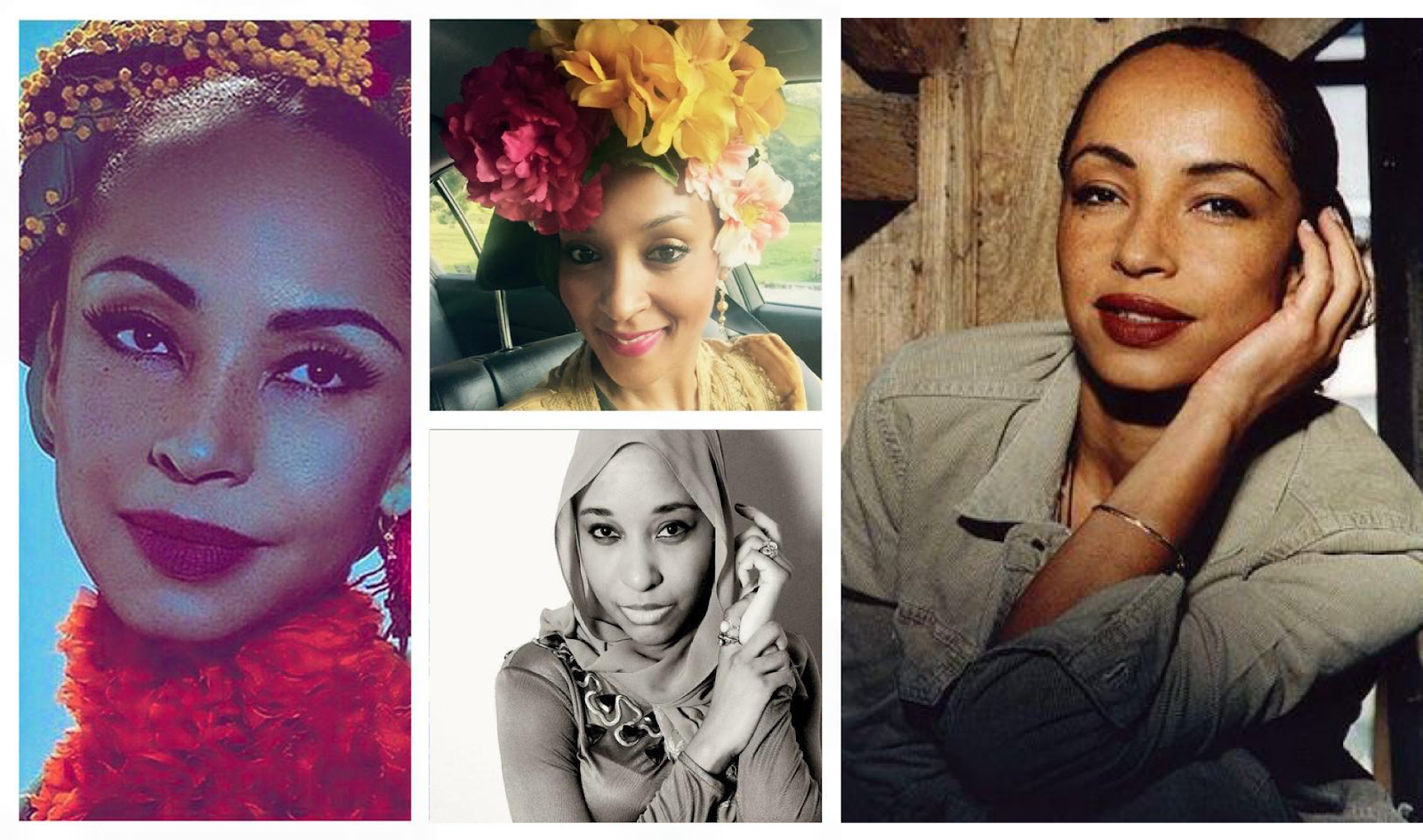
Author, Ayisha, w/flower crown at Eid
Fashion designer Nzinga Knight 

I remember the magic like it was yesterday: Spring 1993. I stood in my mother’s bedroom, which was a retreat in our small home in East Atlanta. Sade’s latest cd had come out—a long-anticipated one, nearly five years after the previous one. Its name: Love Deluxe. The song that played over the radio speakers that moment was as dreamy, as romantic, as perfectly melodic as her earlier classics.

Too, I think there was something about that age. I was 14 years old, a freshman in high school. I was becoming the hopeless romantic that I am today. Sade’s music cultivated the seeds of radical love growing inside me:

There must have been an angel by my side
Something heavenly led me to you
Look at the sky
It’s the color of love

When I was led to you
I knew you were the one for me
I swear the whole world could feel my heartbeat
When I lay eyes on you
You wrapped me up in
The color of love

“Kiss of Life”

You might be wondering where this never-ending, deep love for Sade’s music began. Well, it wasn’t just her music that drew me to her. Helen Folasade Adu, aka Sade, was Nigerian-born to a Nigerian father, Adebisi, and British mother, Anne. Her name Folasade means “honor confers a crown.”

In addition to our shared roots traced back to the African Motherland, people began to tell me in my teenage years that she, yes Sade, was my celebrity look-alike. Actually, many Black women and girls found a physical resemblance to Sade uplifting and noteworthy, as did fellow hijabi and fashion designer Nzinga Knight (seen in cover collage above). For me, I’m sure it was the large forehead mainly, and the slender nose. And the reason that I even knew who they were speaking of was that my dad introduced me to her in the home. I recall spotting one of her cassette tapes in the den, a part of my father’s collection in the mid to late 80s.

Although I can’t recall if it was her debut album, Diamond Life, with the popular hit “Smooth Operator,” or the ’85 Promise album with the favorite “Sweetest Taboo,” my dad was the parent who introduced us to the groundbreaking, conscious music of that time: Sade, Tracy Chapman, Eric B. & Rakim, and others. But, if you want to get a good feel for the beginning of Sade’s career, and see her modestly seductive, sweet dance moves, check out the lyrics and video of her classic, “Sweetest Taboo”:

You’ve got the biggest heart
Sometimes I think you’re just too good for me
Everyday is Christmas, and every night is New Year’s Eve
Will you keep on loving me
Will you keep on, will you keep on
Bringing out the best in me

(For Muslims, it’s satisfying to substitute Christmas with ‘Eidul-Fitr’ and New Year’s Eve with ‘Lailatul Qadr.' Smile)


Quite simply, Sade’s music, and what it represented, had this way of making me feel beautiful, romantic, cultured, confident, and powerfully feminine. Once, my high school English teacher laughed at my poetry, saying it was more like a “short story.” It was the influence of Sade’s music that allowed me to claim my poetic brilliance in spite of the academic criticism.

In college, I found myself in a serious relationship. While hoping to make the hours go by faster at my summer office job, I was inspired to express my gratitude for this burgeoning love affair. Brace yourself for the creative, brilliant, steamy (yet corny) title and winning line from the poem. It was entitled, “It,” and one of the culminating lines was, “It…is KING.” Brilliant, get it?! “It is...Your love!” Some of you know that this line was a play on the words in the title of one of Sade’s classics, shared below.

Then, there were those bonding moments when I realized that others in my small African American Muslim community also listened to Sade’s music and had been introduced to it in similar ways. One such moment stands out vividly in my mind. During the days of walk-mans and weekend trips to festivals on MARTA (subway system), my friend Amber stood on the train in front of me, listening to Sade’s Diamond Life on cassette tape. From her mouth, the words came out humorously distorted, somewhat obnoxious, but beautiful and hopeful, nonetheless. Song: “Your Love is King.” OMG! My heart opens ever so widely every time I hear this song, no matter how repeatedly broken, how guarded, how distrusting. My broken heart opens to the lyrics, the melody, the points of emphasis, all accompanied by Sade’s sultry voice:

Your love is king
Crown you with my heart
Your love is king
Never need to part
Your kisses ring
Round and round and round my head
Touching the very part of me
It’s making my soul sing
Tearing the very heart of me
I’m crying out for more

You’re making me dance
Inside

As my friend Amber held on to the train car handles, swaying from side to side, I recognized the effect that Sade’s music has on the average person: It’s as if you’re put in a trance. You get in touch with the radical lover inside yourself, inside all of us.

Ultimately, this song could be taken as a love song for God’s healing, rejuvenating, life-producing Love: “This is no blind faith – This is no sad or sorry dream – This is no blind faith – Your love, your love is REAL!” Is there any love more real, more certain, more electrifying, more permanent than God’s?


Indeed, Sade’s musical lyrics point me back towards God, as in the title song of her 2000 album, “Lover’s Rock”: “When I need to be rescued – And I need a place to swim – I have a rock to cling to in the storm – When no one can hear me calling – I have you I can sing to – And in all this – And in all my life – You are the lovers rock – The rock that I cling to.”

If you didn’t know any better, you might be thinking that Sade’s music only reflects romantic love. NOT! I eerily realized this for myself when reacquainted with Sade’s earliest music during my earth-shattering separation (which led to divorce and a custody battle). The title of this 1985 song, “War of the Hearts,” confirms, again, why I have such a strong, personal connection to Sade’s music.

I could aim, but I could not fire
Who's calling the shots
One of us must make the peace
To have or to have not
The fire has got to cease
I'm loaded
Don't know where to point this thing
It's a sin
How we hit where it hurts

One of us (one of us) must end this masquerade
To have or to have not
Let's heal the wounds that we've made
It's a war of the hearts


As I move on lovingly, faithfully, reclaiming my heart, I still depend on Sade’s music to reveal powerful lessons on the path to radical love – “Love Is Stronger than Pride,” “Soldier of Love,” “Hang On to Your Love,” to name a few. I am hopeful in love and better equipped to take on its challenges.

A favorite photo of artist from the 80s

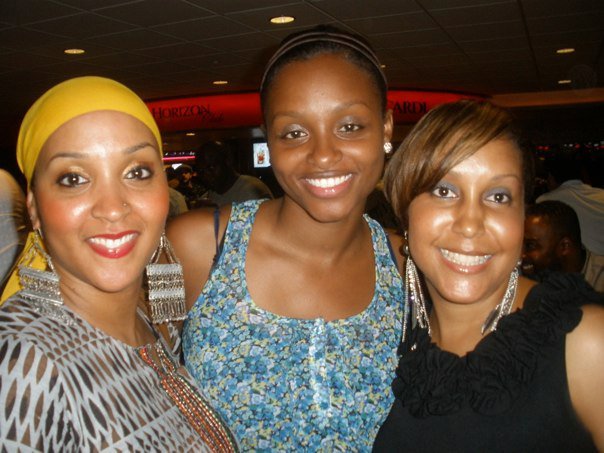
Sade Concert, '11 at Philips Arena in Atlanta, GA, w/childhood friends Qadara Abdur-Rahman and Fatima El-Amin

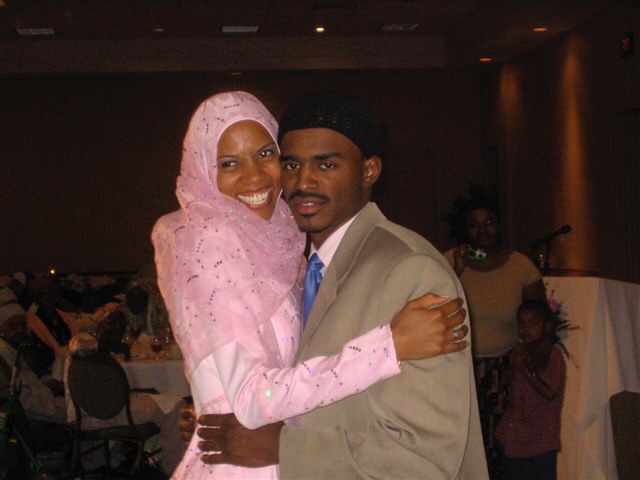
It’s not surprising that Sade released her fifth album in 2000 to mark a new era: Lover’s Rock. And coincidentally, today we celebrate the 13th wedding anniversary of my sister Jamillah, HagarLives co-author. Of course, I was thrilled thirteen years ago when they chose a Sade song for their first dance, “By Your Side”:

When you're lost
You're alone and you can't get back again
I'll find you, darling, and I'll bring you home
And if you want to cry
I am here to dry your eyes
And in no time, you'll be fine
You think I'd leave your side, baby
You know me better than that
Think I'd leave you down when you're down on your knees
I wouldn't do that
I'll tell you you're right when you're wrong
And if only you could see into me
Oh, when you're cold
I'll be there, hold you tight to me
Oh, when you're low
I'll be there by your side, baby

Jamillah Karim w/husband Hud Williams
First wedding dance


Thank you, Sade.

He [God] built a bridge to your heart
All the way
How many tons of love inside
I can't say

Hagar sings.

*Featured female artist: Nzinga Knight, Fashion designer and creator of Brooklyn Brewed Sorrel Mocktail. Visit: https://nzingaknight.com/